The Beginner's Guide to Canadian Credit Card Points (2026)
New to credit card rewards in Canada? This complete guide explains how points work, which programs matter, and exactly how to get started without making costly mistakes.

Every year, millions of Canadians leave thousands of dollars in free travel on the table — simply because nobody explained how credit card points actually work. This guide will change that. By the end, you'll understand the Canadian points landscape, know which programs are worth your time, and have a clear plan to earn your first free flight.
How Credit Card Points Actually Work
When you spend on a rewards credit card, you earn points (or miles, or dollars) based on your spending. The earn rate varies by card and category: a card might give you 5x points at restaurants, 3x on groceries, and 1x everywhere else. Those points accumulate in a loyalty account and can be redeemed for flights, hotels, statement credits, merchandise, and more.
The key insight: the same dollar spent can be worth vastly different amounts depending on which card you used and how you redeem the rewards. A savvy Canadian can extract 3–5× more value per dollar spent than someone using a basic no-rewards card.
The Three Types of Canadian Points Programs
1. Bank Point Currencies (Flexible)
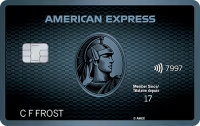
These are points issued by a bank that can be transferred to multiple airline and hotel programs. Amex Membership Rewards (earned on Amex Cobalt, Platinum, etc.) is Canada's most powerful example — you can transfer to Aeroplan, British Airways Avios, Flying Blue, and more. RBC Avion is another. These are the most flexible currencies because you're not locked into one airline.
2. Airline Programs (Locked-In)
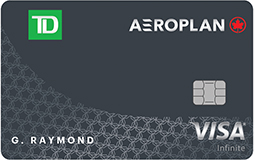
Aeroplan is Canada's dominant airline program, operated by Air Canada. TD and CIBC issue Aeroplan co-branded cards that earn directly into your Aeroplan account. The advantage: these cards often earn at higher rates for Air Canada purchases. The tradeoff: your points are tied to Air Canada's partner network.
3. Coalition Programs (Simple & Retail)
Scene+ (Scotiabank + Cineplex + Sobeys) and BMO Rewards are simpler programs — points are worth a fixed 1 cent each and redeem for travel, movies, or statement credits. No complex award charts, no partner transfers. Excellent for beginners who want simplicity.
Which type is right for you?
Start with a flexible bank currency (like Amex MR) or a coalition program (like Scene+). Once you understand the basics and know where you want to travel, layer in a specific airline card like TD Aeroplan for targeted earning.
How to Earn Your First 50,000 Points
50,000 Aeroplan points is roughly enough for a round-trip economy flight from Toronto to London, or a one-way premium economy seat. Here's a realistic path to getting there in 6–12 months:
- Apply for the Amex Cobalt — earn 15,000 bonus points over your first year by spending $500/month
- Use the Cobalt for all restaurants and grocery purchases (5x points)
- At $500/month on food categories: 5,000 pts/month = 60,000 pts/year just on dining/groceries
- Add an annual spend of $500 on travel: +1,000 pts
- Transfer your Amex MR to Aeroplan when you're ready to book
Points Valuation — What Are Your Points Worth?
Points aren't worth a fixed dollar amount — their value depends on how you redeem them. A single Aeroplan point might be worth 0.5¢ if you redeem for merchandise, or 2.5¢ if you book a business class seat. This is why the redemption strategy matters as much as the earn strategy.
| Program | Cash/Statement Redemption | Economy Flight | Business Class |
|---|---|---|---|
| Aeroplan | ~0.8¢ | ~1.5¢ | ~2.0–3.0¢ |
| Amex MR (via transfer) | ~1.0¢ | ~1.5¢ via Aeroplan | ~2.0–3.0¢ via Aeroplan |
| Scene+ | 1.0¢ | 1.0¢ | N/A |
| BMO Rewards | ~0.67¢ | ~1.0¢ via portal | N/A |
| RBC Avion | ~0.9¢ | ~1.5¢ via Avios | Variable |
The most important rule: never redeem points for gift cards or merchandise
Gift card and merchandise redemptions typically get you 0.5¢ or less per point — far below what you'd get on flights. If you're going to collect points, commit to redeeming them for travel. That's where the outsized value lives.
Common Beginner Mistakes to Avoid
- Applying for too many cards at once — space new applications 6 months apart to protect your credit score
- Carrying a balance — credit card interest (20–23%) instantly destroys any points value
- Letting points expire — check your program's expiry policy and keep accounts active
- Redeeming for merchandise or gift cards — always redeem for travel to get maximum value
- Ignoring the welcome bonus — the sign-up offer is often worth more than 12 months of spend
- Transferring points without confirmed award availability — transfers are permanent and one-way
Your First 90-Day Action Plan
- Day 1: Choose one card — we recommend the Amex Cobalt for most Canadians starting out
- Day 30: Create an Aeroplan account (free) so you're ready to receive transfers
- Day 60: Set up auto-pay in full to avoid interest charges
- Day 90: Check your Amex MR balance; if you've spent $500/month, you should have 8,000+ pts
- Ongoing: Search award availability on aeroplan.com to set a redemption goal
Cards Mentioned in This Article

Advertiser Disclosure: SmartCardOffers may earn a referral fee when you apply for products through links on this page. This does not affect the way we evaluate or rank products. Rates, fees, and offer details are subject to change — always verify with the card issuer before applying. Learn more about how we make money.